Power Cable Types
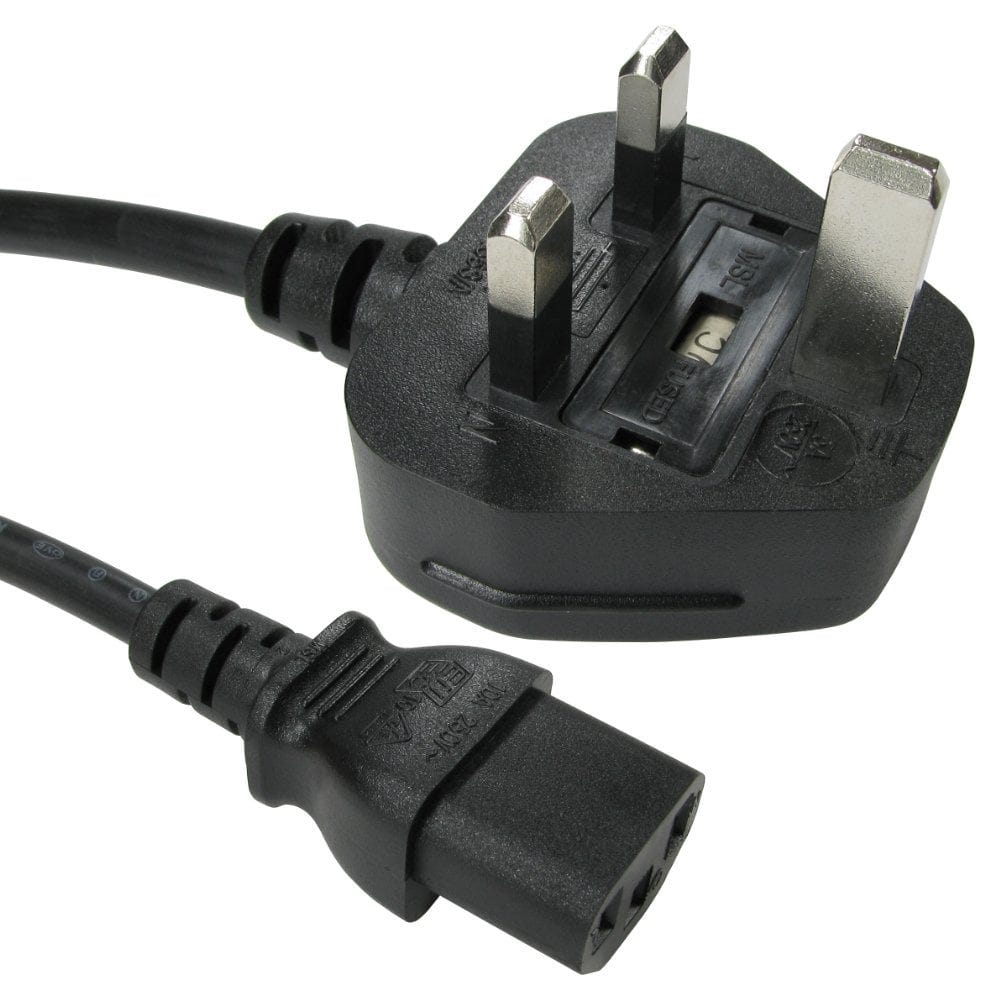
Most mains powered equipment takes a detachable lead with a UK plug at one end and a standard IEC connector at the other. The connectors have codes such as C13, C5 and C7, but most people know them as the kettle lead, the clover leaf and the figure 8. This guide shows what each one looks like, what it is used for and how much power it is rated for, so you can find the lead that fits.
Power connectors at a glance
| Connector | Shape | Also called | Rating | Found on |
|---|---|---|---|---|
| C13 | Kettle lead, IEC lead, PC power cable | 10A, earthed | PCs, monitors, printers, TVs, amplifiers, network equipment | |
| C15 | Hot condition kettle lead | 10A, earthed, up to 120°C | Kettles and equipment that runs hot | |
| C19 | 16A IEC lead | 16A, earthed | Servers, large UPS units, rack PDUs, high power equipment | |
| C5 | Clover leaf, cloverleaf, Mickey Mouse | 2.5A, earthed | Laptop power supplies, projectors, some TVs | |
| C7 | Figure 8, figure of 8 | 2.5A, not earthed | TVs, games consoles, radios, printers, chargers |
The connector on the lead (C13, C15, C19, C5, C7) fits into a matching inlet on the equipment, which has the next number up: C14, C16, C20, C6 and C8. Drawings show the face of the connector on the lead, roughly to scale with each other.
C13: the "kettle lead"
The C13 is the most common power connector there is, with three slots in a rectangular face with two angled corners. It powers desktop PCs, monitors, printers, many TVs and hi-fi amplifiers, and most office and network equipment, and fits the C14 inlet on the back of the equipment. It is rated at 10A.
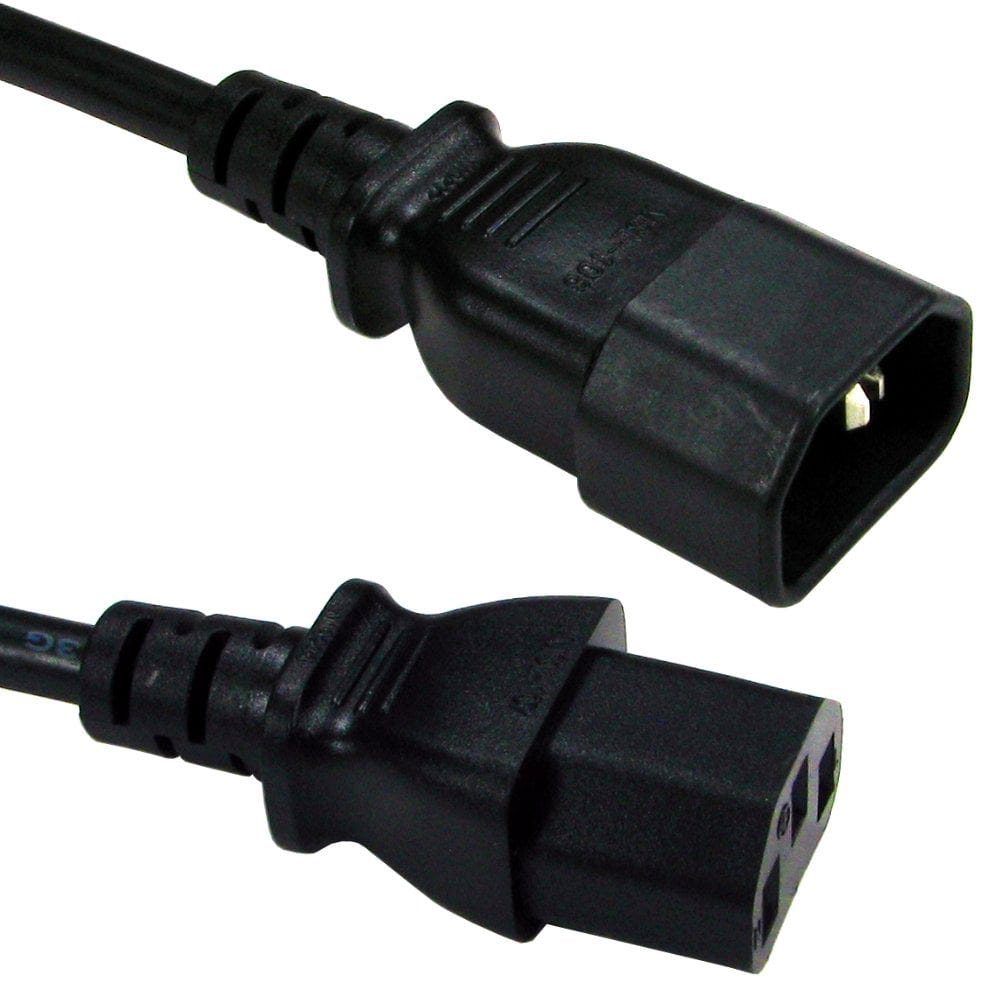
Everybody calls it a kettle lead, but a kettle with a detachable lead actually needs the notched C15 below; a C13 will not fit a kettle. A C13 to C14 lead extends a kettle lead, or connects equipment to the sockets on a UPS or rack PDU, and a splitter runs two devices from one inlet.
C15: the hot condition lead
The C15 looks like a C13 with a notch in the edge opposite the earth slot. It is made for equipment that gets hot, rated for connector temperatures up to 120°C, and is the lead that genuinely fits a kettle with a detachable lead (the C16 inlet). Because of the notch, a C15 also fits a normal C14 inlet, so it can be used anywhere a C13 can; but a C13 will not fit a C16 inlet.
C19: for high power equipment
The C19 is larger than a C13, with three flat slots, and is rated at 16A. It is used for servers, large UPS units, blade chassis and rack PDUs that draw more than a C13 can handle, and fits the C20 inlet. On a UK plug the lead is limited by the plug's 13A fuse. C20 to C19 leads connect equipment to a PDU's C19 outlets.
C5: the clover leaf
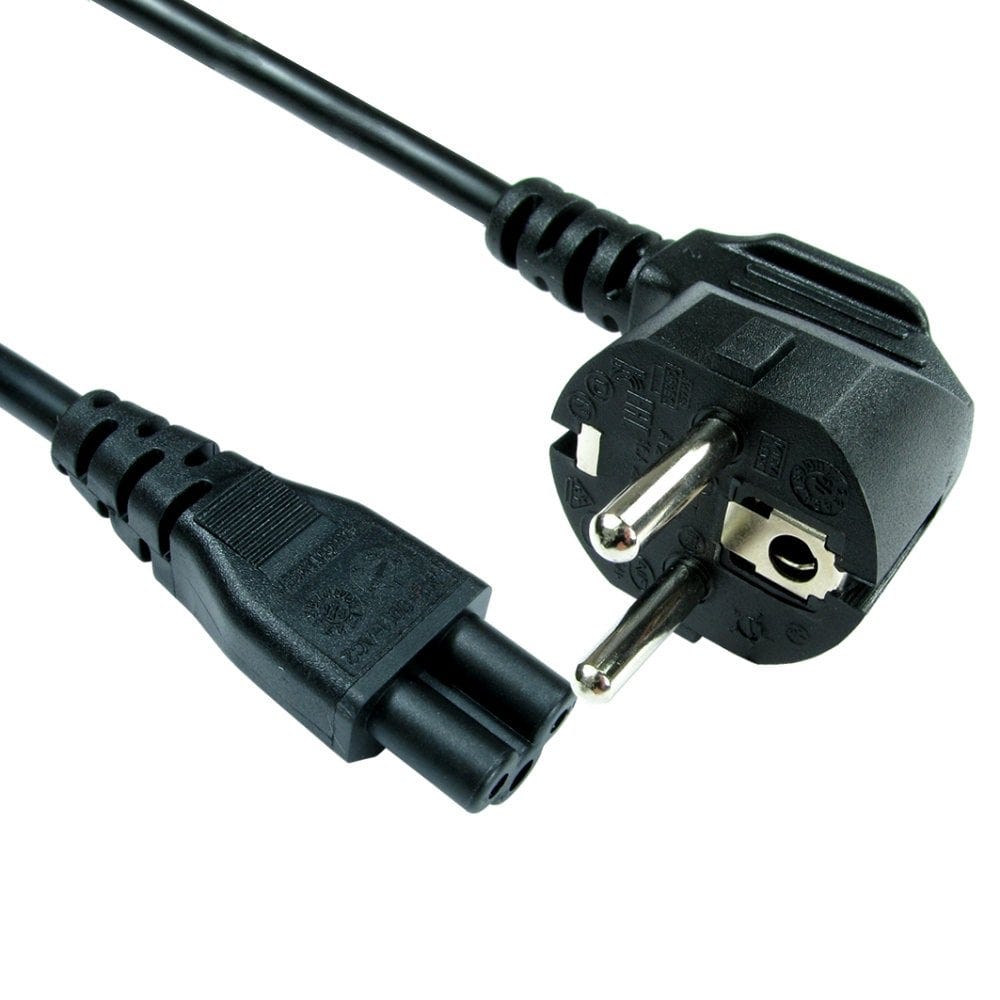
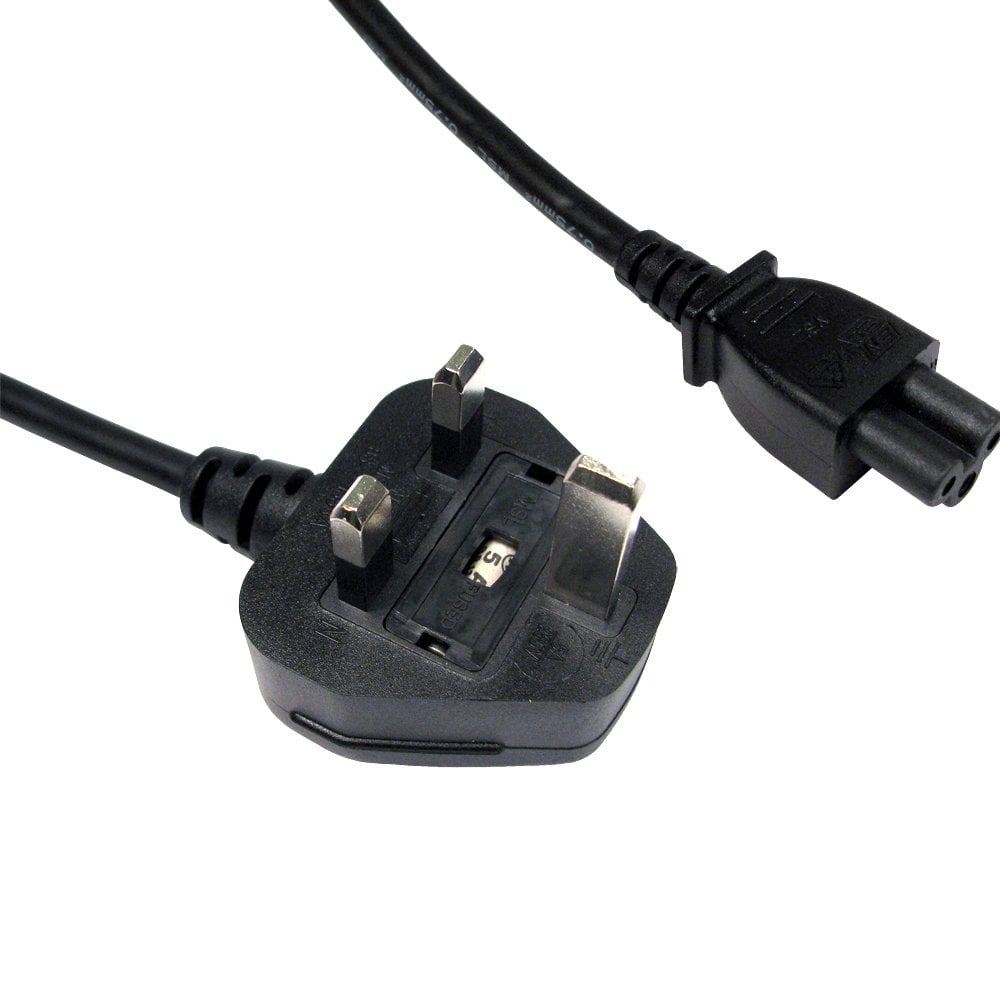
The C5 has three round lobes, like a clover leaf (it is also called the Mickey Mouse lead). It is earthed and rated at 2.5A, and is used on many laptop power supplies, projectors, some TVs (including many LG models) and other small equipment, fitting the C6 inlet.
C7: the figure 8
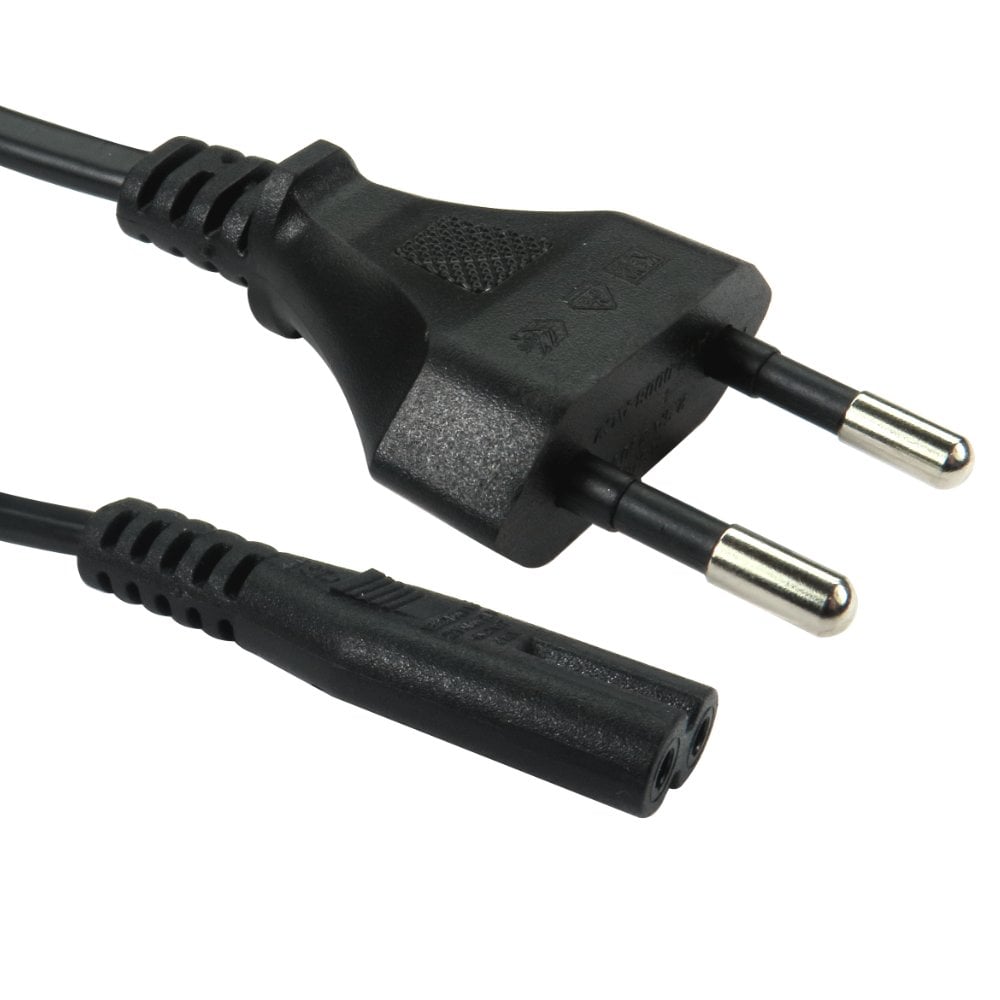
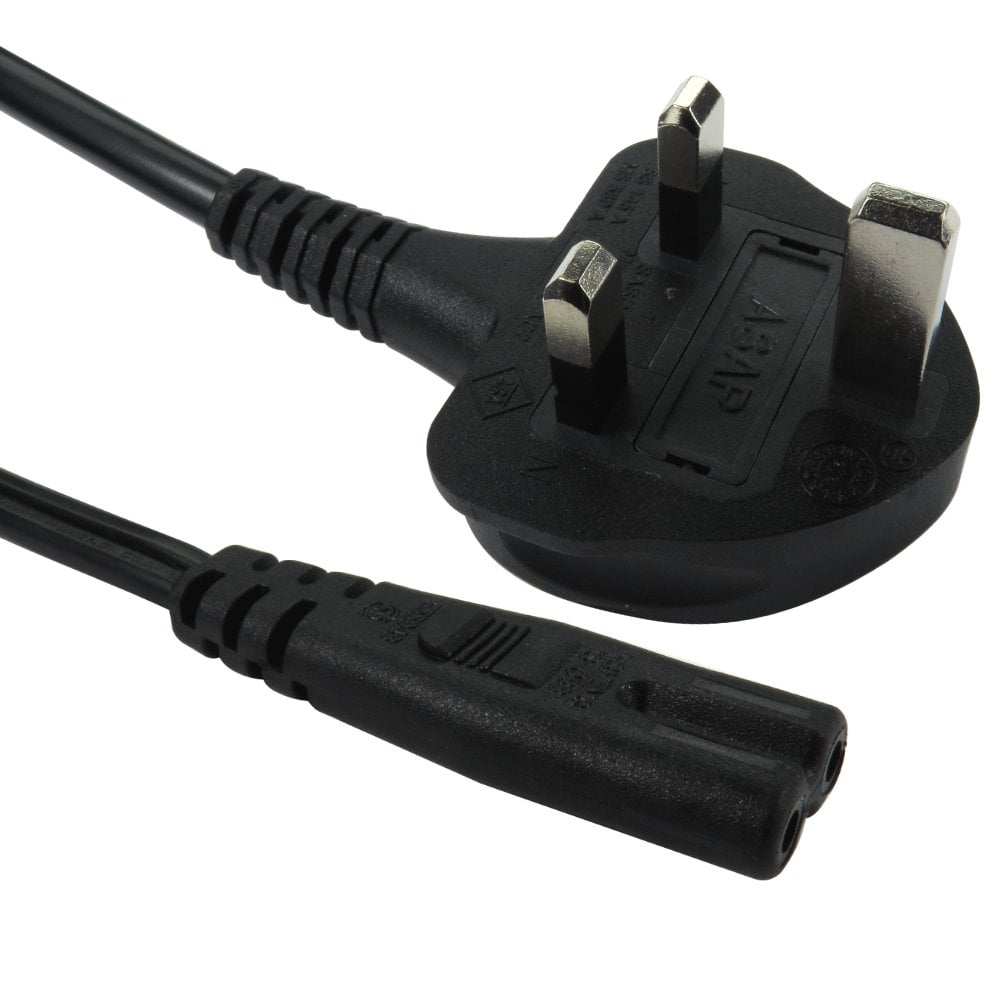
The C7 has two round lobes, like a figure 8, and two contacts with no earth. It is rated at 2.5A and powers TVs, games consoles, radios, small printers, chargers and other double insulated equipment, fitting the C8 inlet. Right angle figure 8 leads keep the cable tight to the back of a wall mounted TV.
Fuses, ratings and thickness
- UK plugs have a fuse inside, chosen to protect the lead. If a fuse blows, replace it with one of the same rating, never a higher one.
- The connector rating (2.5A, 10A or 16A) is the most it can carry. Your equipment draws less than this; the rating plate or power supply label tells you how much.
- Conductor size is given in mm², such as 0.75mm or 1.0mm. Thicker conductors carry more current and suit longer leads and higher power equipment; C19 leads typically use 1.5mm.
- Do not join leads together to make up the distance or use adapters to force a lead into a different inlet. Buy a lead of the right type and length.
Extensions, locking leads, Euro and US leads
- Locking power leads latch into the inlet so they cannot be knocked out, which is useful for servers and network equipment in racks.
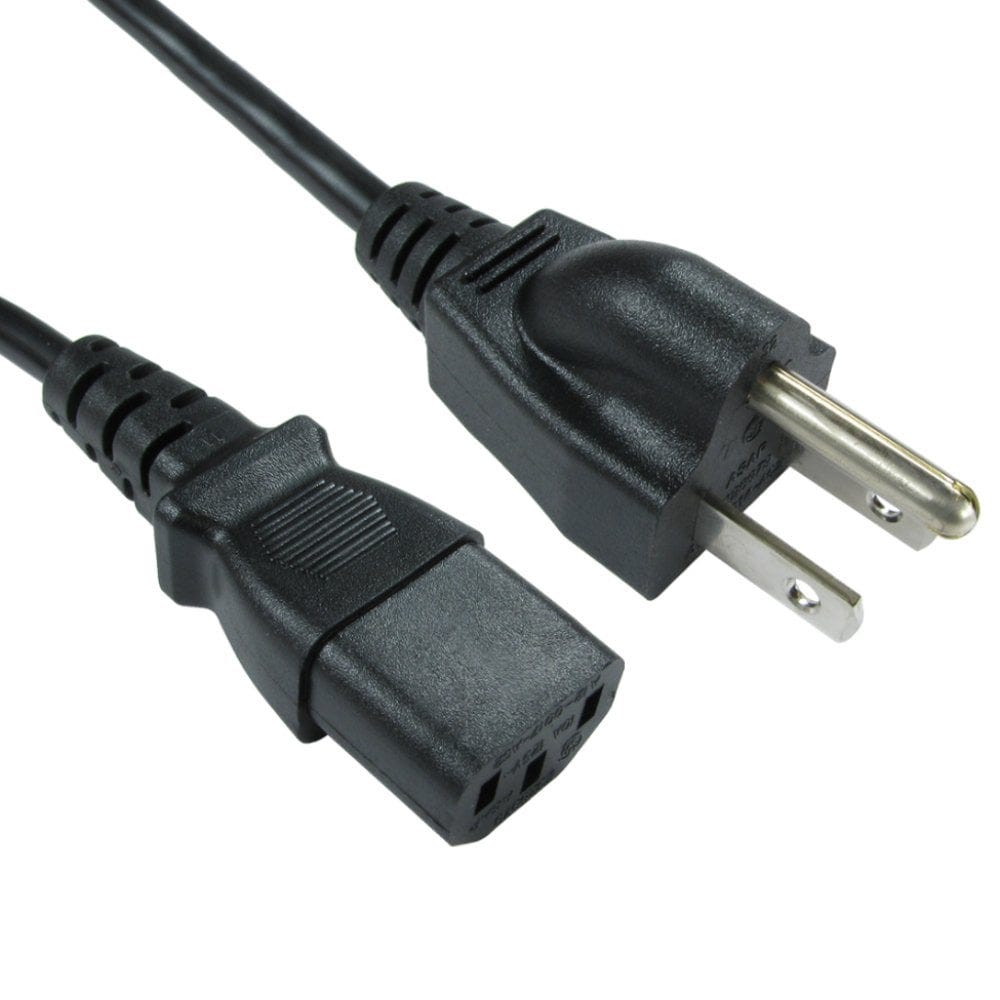
- Euro (Schuko) and US leads have the same C13, C5 or C7 connectors with a European or American plug, for use abroad or with equipment that will travel.
- Rewireable plugs and connectors let you make up a lead to length.
- Power strips and extension leads give several UK sockets from one wall socket. Choose surge protection for computers and TVs, and do not plug in more than the strip is rated for.
Which power lead do I need?
- Look at the inlet on your equipment and match it to the drawings above.
- Choose the plug for the other end: UK for use here, or Euro or US for travel and imported equipment.
- Pick the length; 1.8m and 2m suit most desks and TV units. A right angle connector helps where space behind the equipment is tight.
Still not sure? Call us on 0207 100 6326 and we will help you find the right lead.
Popular power leads